Property
UK rents outpace house prices—but the gap is not a rental yield
The latest British data separate the monthly cost of housing from the price of acquiring a property.
Read the story46 stories
The latest British data separate the monthly cost of housing from the price of acquiring a property.
Read the storyItalian housing prices still rose in the second quarter. Slower growth is different from falling prices.
Read the storyAugust’s Dutch figures tell different stories depending on whether the comparison is monthly or annual.
Read the storyJuly’s European figures indicate a pause in the monthly decline, not a recovery of previous output.
Read the storyThe Commission targets areas under the greatest housing pressure. Its proposal should not be presented as an applicable final regulation.
Read the storyAugust’s increase matters to home seekers, but it does not mean every existing tenancy became more expensive.
Read the storyJuly’s monthly and three-month growth figures match numerically, but their comparison periods differ.
Read the storyThe generation mix matters, but an industrial buyer’s bill also depends on when and how it purchases power.
Read the storyJuly’s decline concerns construction output. Residential transaction prices measure a different market process.
Read the storyAugust’s US figures use an annualised rate. The monthly increase does not establish a turning point.
Read the storyThe first eight months’ data show why a single growth figure cannot describe the whole property market.
Read the storySeptember’s higher ifo reading is an encouraging signal, but sentiment and signed orders remain separate steps.
Read the storySecond-quarter external balance cannot be assessed from a minus sign alone: the current account and net lending measure different things.
Read the storyDiverging August EU price indices show why travel costs cannot be reduced to a single number.
Read the storyDifferent sector paths sit behind the national industrial increase, an important distinction for suppliers.
Read the storyJuly’s retail data measure a change in sales volumes. They do not establish how profitable retailers were.
Read the storyThe latest July earnings release uses averages and medians to answer different questions about Hungarian pay.
Read the storyThe central bank is changing its longer-term benchmark. The announcement alone does not rewrite loan contracts or deposit rates.
Read the storyEuro-area monetary policy can affect Hungarian companies, but the transmission depends on funding currencies and contract terms.
Read the storyThe Fed’s September tightening changed the backdrop for dollar assets. Currency movements also shape a Hungarian saver’s outcome.
Read the storyParticipation rules for supplementary pensions are back in the European policy debate. No new compulsory EU-wide system has been announced.
Read the storyTechnology dependence and less transparent financing channels also shape the financial system’s vulnerabilities.
Read the storyThe Council has adopted temporary measures; the terms for each product will determine the commercial opportunity.
Read the storyThe gap between import value and volume explains why counting barrels alone misses the cost pressure.
Read the storyThe Commission’s assessment is not a price guarantee: supply security and procurement costs are separate questions.
Read the storyEU road freight volumes increased, but cargo weight alone cannot establish how well hauliers are doing.
Read the storyThe definitive measure may affect cost planning for businesses that use plant-based protein.
Read the story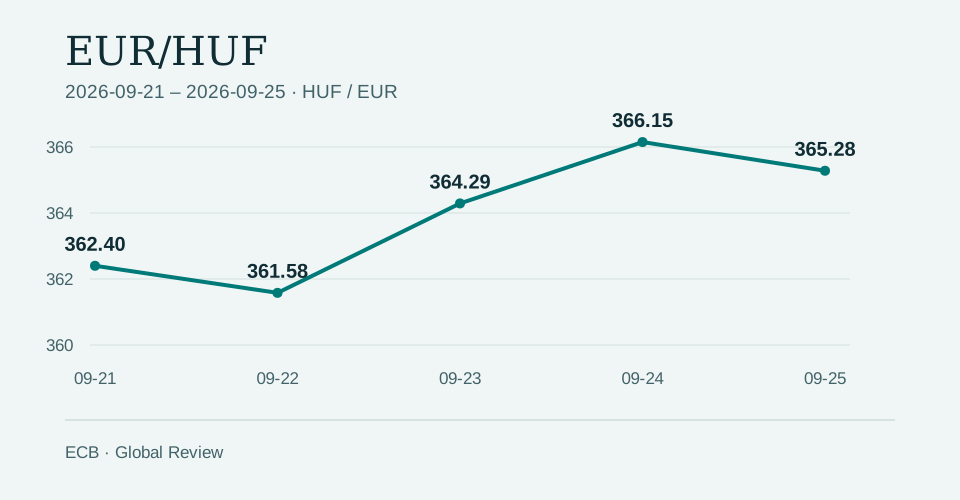
The official US calendar lists two important releases for the week. For Hungarian investors, the dollar’s value in forints matters alongside share prices; Friday’s reference exchange rate provides context only.
Read the storyThe provisional official final result shows 70.15% voting no; the initiative failed to win a majority in any canton.
Read the storyThe special holiday covers 28–29 September; the exchange has indicated normal operations for 28 September.
Read the storyContinued ash emissions from Etna have extended the suspension until 12:00 on 28 September.
Read the storyNew EU consumer-protection rules begin applying on 27 September. The change also affects sustainability claims made by businesses in Hungary.
Read the storyThe five men initially arrested over suspected explosives offences have also been arrested on suspicion of preparing a terrorist act; no charges have been announced.
Read the story
Hungary's prime minister wants to reopen KATA to entrepreneurs billing companies. In Szolnok, he promised a wealth-tax launch on 1 January 2027; the detailed rules will be decisive.
Read the storySOCAR confirmed the partners' final investment decision on 26 September.
Read the storyRomania's January–August 2026 deficit was RON 59.42 billion, down from RON 86.36 billion a year earlier.
Read the story
KSH counted 229,000 unemployed in August, a rate of 4.7%. Three-month data show fewer people in work and a rising share of those searching for more than a year.
Read the story
The ifo export expectations index fell from 9.8 to 8.0 points. Carmakers once again expect exports to decline, while machinery makers have become more optimistic.
Read the story
Annual growth eased to 4.2% in August. That alone does not establish a turning point in investment.
Read the story
Web Summit 2026 takes place on 9–12 November.
Read the story
A Brussels meeting on Europe’s diplomatic calendar.
Read the story
New requirements affect chatbots and artificially generated content.
Read the story
In 2025, 73.3% of the weight of goods imported from outside the EU came by sea, but only half of their value. Air is the reverse: little weight, a fifth of import value.
Read the storyEurostat has published its 2026 regional yearbook.
Read the story
Central-bank rates influence several parts of the economy.
Read the story
Consumer prices rose 1.3% year on year, according to KSH. The average hides wide differences: food and gas got cheaper, while services rose 5%.
Read the storyWe always use the cookies and local storage the site needs to work. Statistics are collected only with your consent, which you can withdraw at any time via “Cookie settings” in the footer. Details: Cookie policy, Privacy notice.